
1870 United States Census
Van Landschoot families and related households in America
The federal census of 1870 records Van Landschoot families at a moment when Belgian immigrant communities in the United States had become more settled and more visible. By this date, many households had been in America for several years, with property, occupations, and children already born on American soil.
For genealogical research, the 1870 census is especially useful because it continues the pattern established in 1860 while also reflecting a more mature stage of family settlement. It helps trace household composition, birthplace, occupation, literacy, and property, and offers a clearer view of how the Van Landschoot family and related households were rooted in the Midwest after immigration.
Map of Van Landschoot Locations in 1870
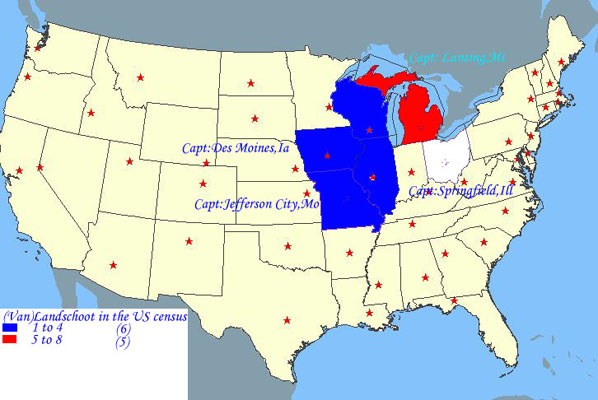
This map shows the known locations of Van Landschoot families and related households recorded in the 1870 United States Census.
How to Read the 1870 Census Schedule
The 1870 federal census preserved the main structure of the earlier schedules, while adding several questions reflecting citizenship, parentage, and social condition. The headings below correspond to the principal fields used by the enumerator and help explain how each census entry may be interpreted.
The number assigned to each house as it was visited by the census taker.
The household number given in sequence during enumeration.
Each person living in the household was listed by name.
The age of each person at the most recent birthday before the census date.
Recorded as male or female.
Usually recorded according to census usage of the period.
Useful for identifying farmers, laborers, craftsmen, and other occupations within the household.
The declared value of land or real property owned.
The declared value of movable goods or personal property.
Gives the state or country of birth and is especially important for identifying Belgian-born family members.
Indicates whether the person’s father was born outside the United States.
Indicates whether the person’s mother was born outside the United States.
Shows the month of birth for infants born during the census year.
Notes the month of marriage if it took place within the previous year.
Indicates school attendance during the previous year.
Marks individuals unable to read.
Marks individuals unable to write.
A special column used by the enumerator to note physical or mental conditions.
Indicates adult male citizenship status.
A special political status column used in the post-Civil War census.
Census Records
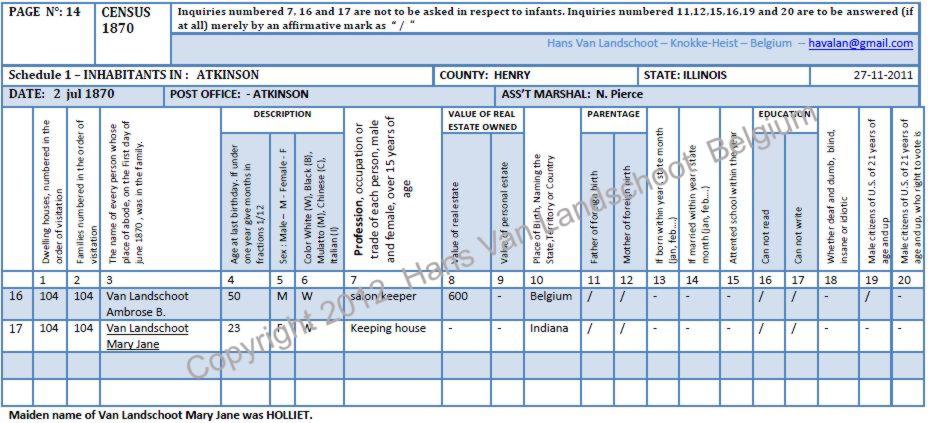
Ambrose Van Landschoot in IL
Census record from 1870. This entry documents the continuing presence of an early Van Landschoot household in the United States.
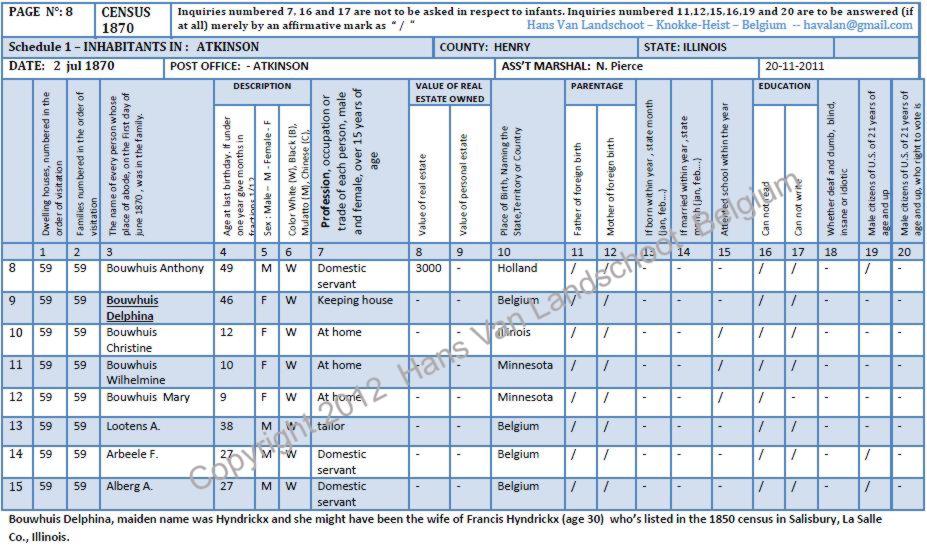
Anthony Bouwhuis in IL
Census record from 1870. A related household that may help place the Van Landschoot family within a wider Flemish immigrant network.
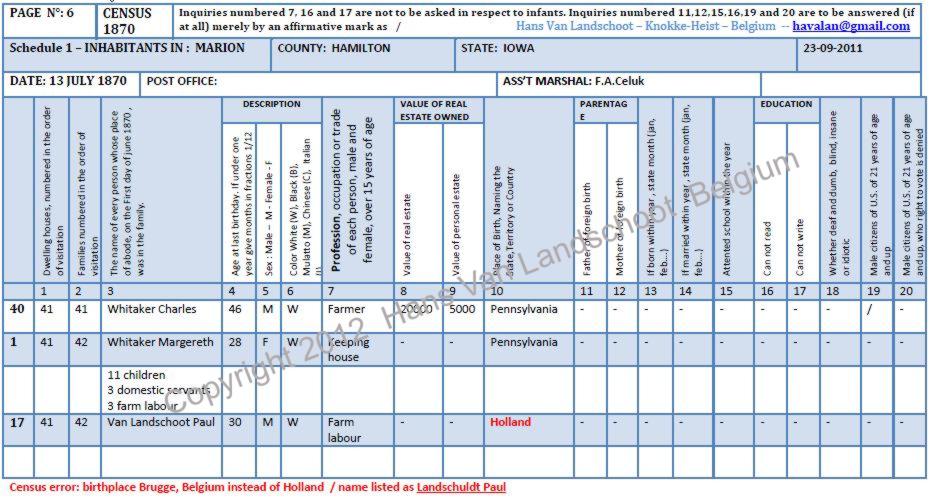
Leopold Van Landschoot in IA
Census record from 1870. This entry adds another branch of the family to the developing American census record.
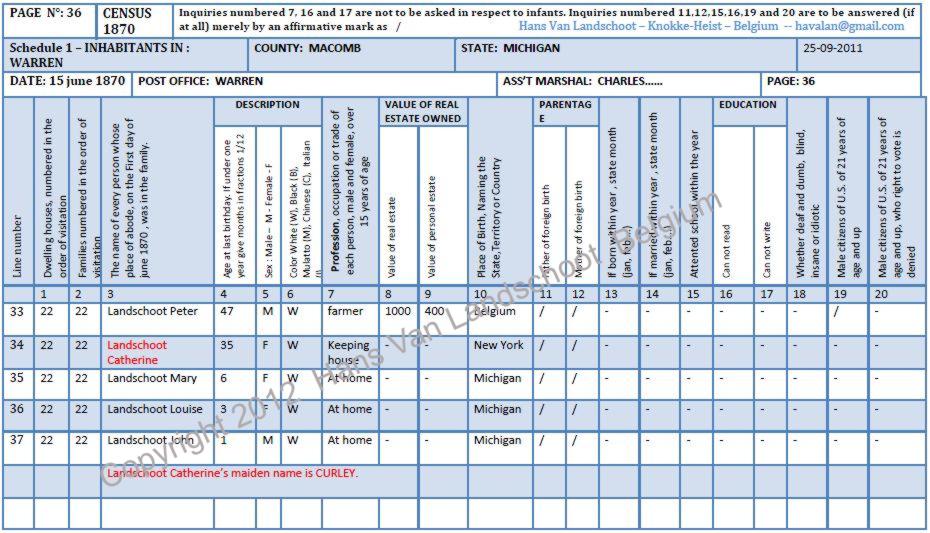
Peter Landschoot in MI
Census record from 1870. A documented household entry showing the continued presence of the family in this decade.
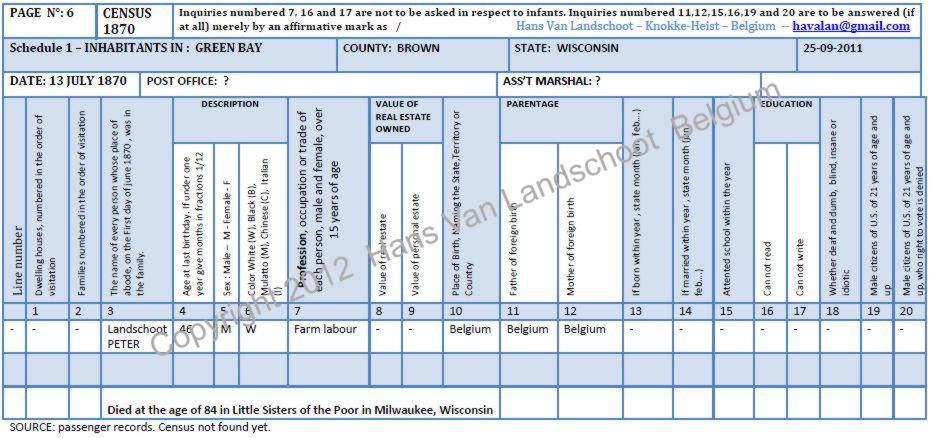
Peter Landschoot in WI
Census record from 1870. A documented household entry showing the continued presence of the family in this decade.
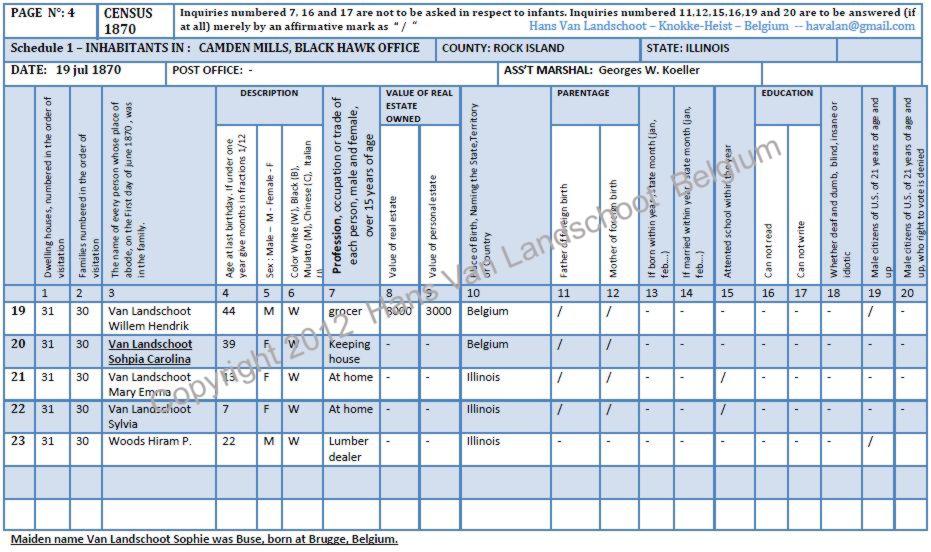
Willem Van Landschoot in IL
Census record from 1870. Another family entry contributing to the wider reconstruction of Van Landschoot households in America.
Based on compiled census images and genealogical identification of Van Landschoot family members and related households in the United States.