
1880 United States Census
Van Landschoot families and related households in America
The federal census of 1880 is particularly valuable for family historians because it records not only names, ages, occupations, and birthplaces, but also the relationship of each person to the head of household. This makes it much easier to reconstruct family structure across generations.
For the Van Landschoot family and related households, the census of 1880 offers a clearer picture of settlement, kinship, and continuity in America. By this time, many Belgian immigrant families were well established, and the census often reflects both European-born parents and American-born children within the same household.
Map of Van Landschoot Locations in 1880
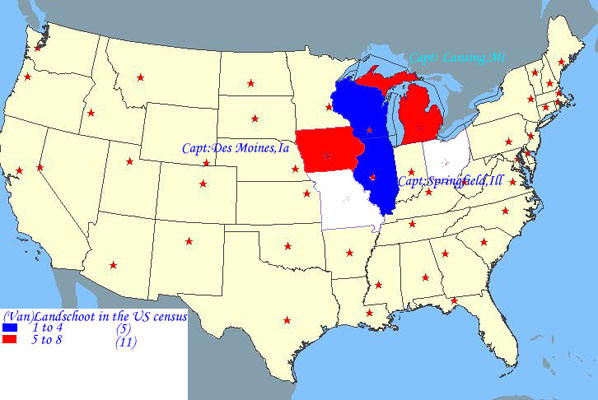
This map shows the known locations of Van Landschoot families and related households recorded in the 1880 United States Census.
How to Read the 1880 Census Schedule
The 1880 federal census is one of the richest nineteenth-century schedules for genealogical work. It records not only the usual personal details, but also family relationships, marital status, and the birthplaces of both parents.
In towns and cities the enumerator often recorded the street name and house number for the dwelling.
The number assigned to each house as visited by the census taker.
The household number given in sequence during enumeration.
Every member of the household was listed by name.
This column identifies whether a person was head, wife, son, daughter, servant, boarder, and so on.
Recorded according to the census terminology of the period.
Recorded as male or female.
The age of each person at the most recent birthday before the census date.
For infants born during the year, the month of birth could be entered here.
A key field for understanding household composition and family history.
Useful for identifying farmers, laborers, craftsmen, and other occupations.
Gives a glimpse of economic circumstances and seasonal work.
Sometimes accompanied by notes about illness or incapacity.
Used to record special physical or mental conditions.
Indicates school attendance during the previous year.
Marks individuals who were unable to read.
Marks individuals who were unable to write.
Gives the state or country of birth and is especially important for Belgian-born immigrants.
An important clue for tracing the older immigrant generation.
Complements the previous column and is often essential for reconstructing family origins.
Census Records
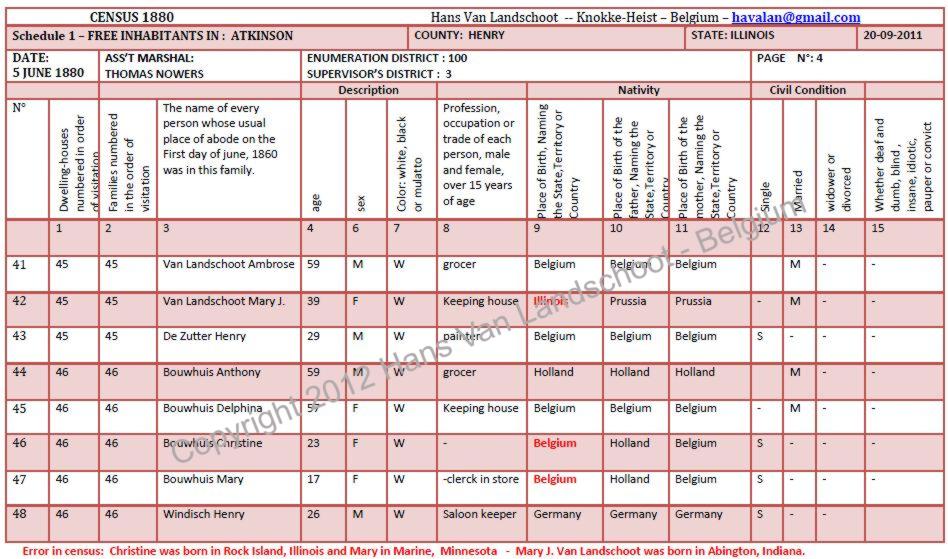
Ambrose Van Landschoot
Census record from 1880. This entry helps document a household that was already well rooted in America by the late nineteenth century.
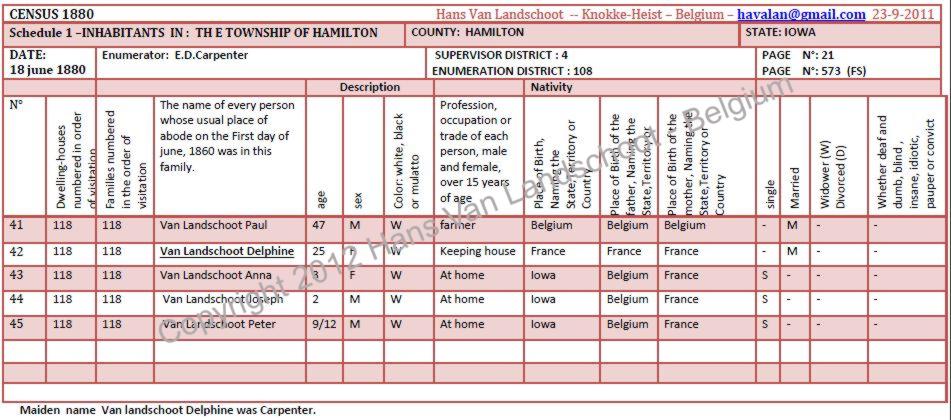
Leopold Van Landschoot
Census record from 1880. A valuable entry for tracing a further branch of the family within the American census record.
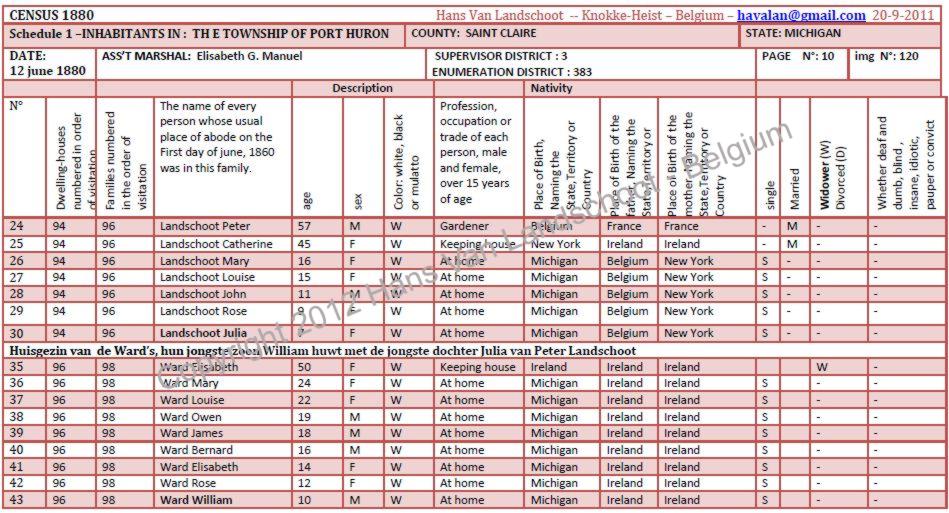
Peter Landschoot
Census record from 1880. This entry shows the continued presence of the family in the United States in a mature stage of settlement.
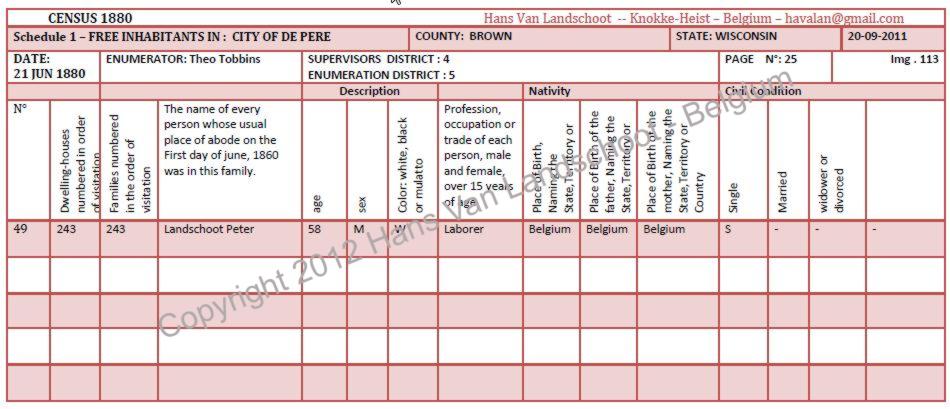
Peter Landschoot (Wisconsin)
Census record from 1880. A separate Wisconsin entry that may represent another household or branch of the same wider family network.
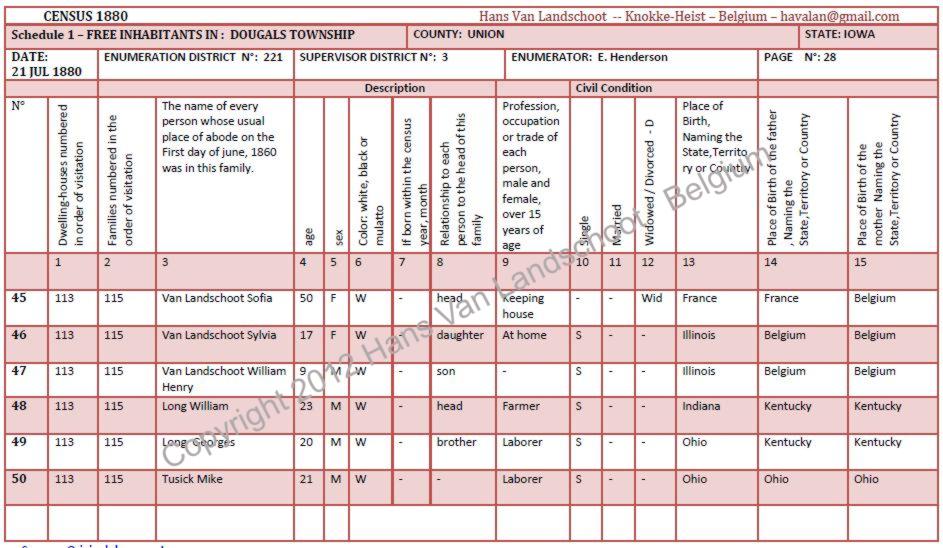

Willem Van Landschoot
Census record from 1880. Another household entry contributing to the reconstruction of Van Landschoot family life in America.
Based on compiled census images and genealogical identification of Van Landschoot family members and related households in the United States.