

Making a Connection
Find Your Family “Past and Present”
A family history milestone first published in January 2000
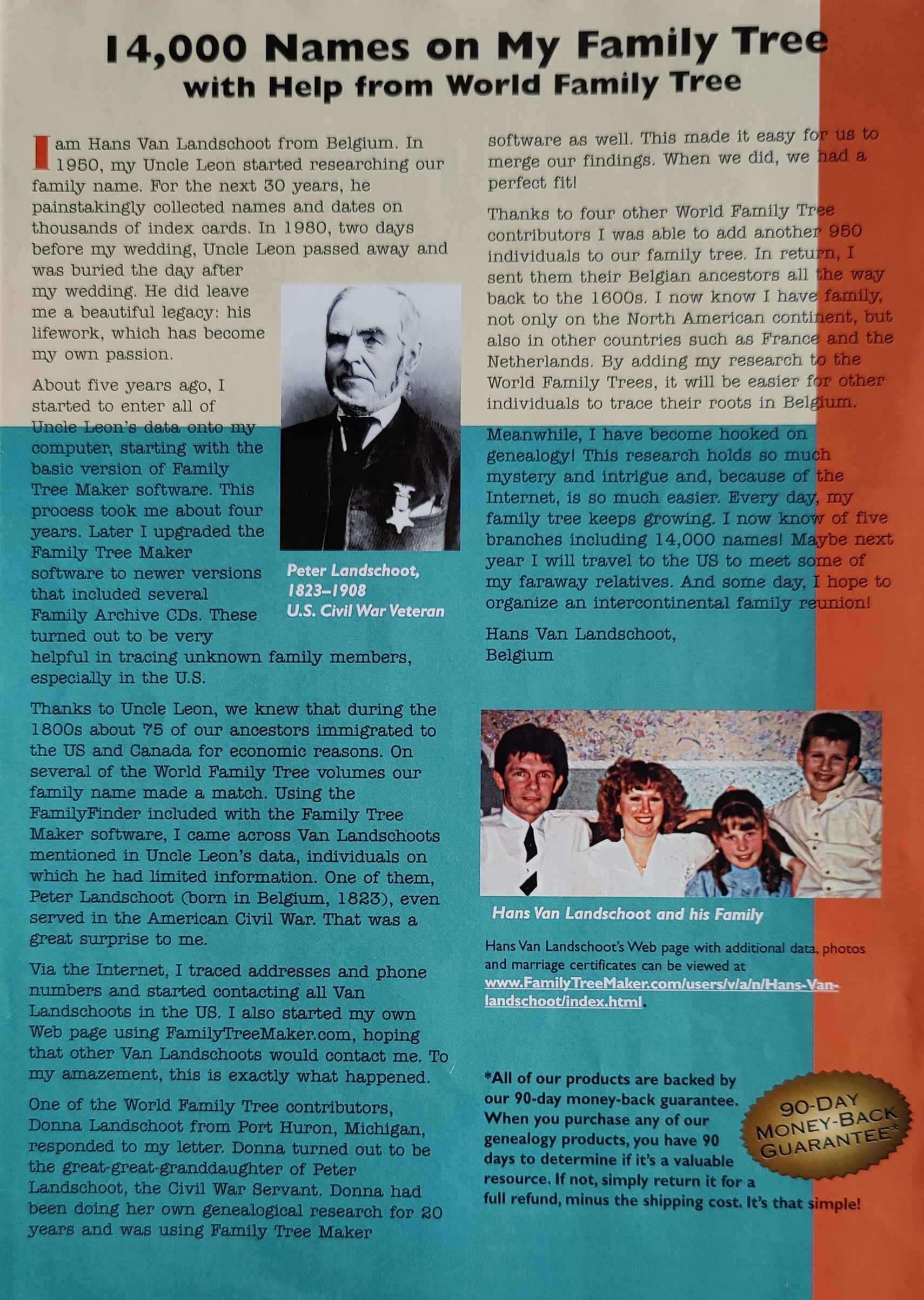
Original publication featuring the Van Landschoot research
This page preserves one of the earliest public accounts of my genealogical work: the moment when decades of Belgian family research, begun on paper by my uncle, were finally joined to living branches of the family in the United States.
I am Hans Van Landschoot from Belgium. In nineteen fifty, my Uncle Leon began researching our family name. For the next thirty years, he patiently collected names and dates on thousands of index cards. In nineteen eighty, only two days before my wedding, Uncle Leon passed away. He left behind more than notes and documents: he left a life’s work, and that work slowly became my own calling.
Some years later, I started entering all of Uncle Leon’s research into my computer. I began with an early version of Family Tree Maker and spent roughly four years transferring the material into digital form. Later versions of the program, together with Family Archive CDs and the World Family Tree tools, opened new paths that had never been available to him.
Family history in transition: from handwritten index cards to digital genealogy.
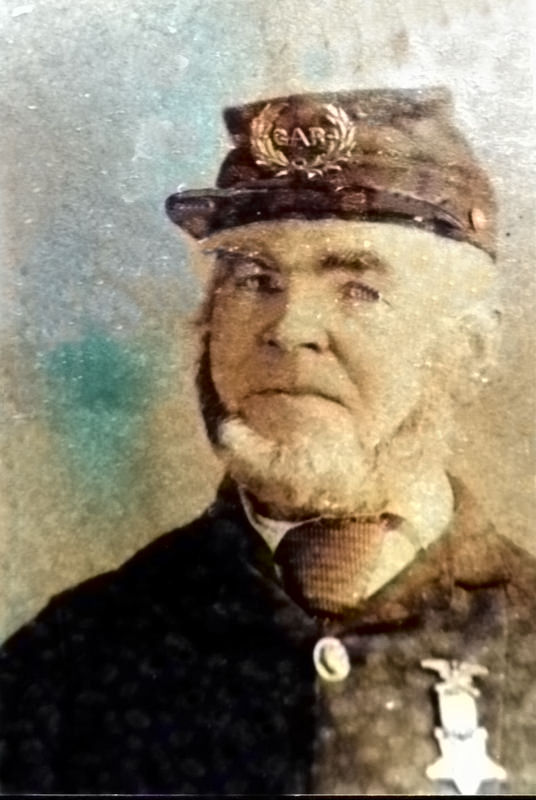
Thanks to Uncle Leon, we already knew that in the nineteenth century about seventy-five members of the wider family had emigrated to the United States and Canada, largely for economic reasons. Once I began comparing our records with World Family Tree entries, a number of names suddenly matched. Among them was Peter Landschoot, born in Belgium in eighteen twenty-three, a man who had gone on to serve in the American Civil War. That discovery alone made clear how much of the family story still lay scattered abroad.
The Internet then made something possible that would have been almost unimaginable in Uncle Leon’s early years of research. I traced addresses, wrote letters, and reached out to Van Landschoots across America. I also created my own page through FamilyTreeMaker.com, hoping that others carrying the name might eventually find it.
That was the real breakthrough. Donna’s research and mine complemented each other perfectly. What had survived in Belgium in one form was preserved in America in another. Once the two sets of material were joined, branches that had long stood apart suddenly became one continuous family story again.
Through four additional World Family Tree contributors I was able to add hundreds more individuals to the broader family tree. In return, I sent those correspondents their Belgian ancestry, in some cases extending back into the seventeenth century. The work that had begun on index cards in Belgium now connected descendants in North America, France, the Netherlands, and beyond.
Looking back, this page marks an important transition point: not only the move from paper records to digital genealogy, but also the move from isolated research to collaboration across continents. It was one of the first moments when the Van Landschoot family story truly became international in a living, personal sense.
Meanwhile, I have become hooked on genealogy! This research holds so much mystery and intrigue and, because of the Internet, is so much easier. Every day, my family tree keeps growing. I now know of five branches including 14,000 names! Maybe next year I will travel to the US to meet some of my faraway relatives. And some day, I hope to organize an intercontinental family reunion!